
Blog
Indian Wellness Traditions: Ancient Practices for Mindful Modern Living

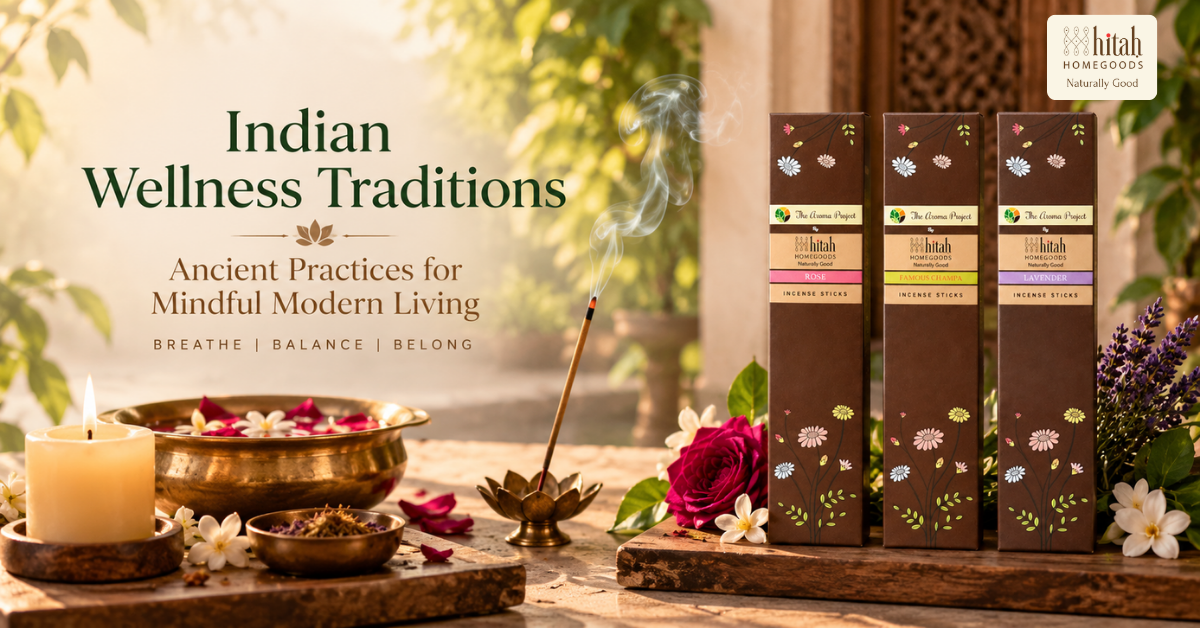
Wellness in the Indian tradition has rarely been understood as something separate from everyday life. It is woven into how we eat, breathe, bathe, rest, care for our homes, connect with nature, and create moments of quiet. Many practices that are now described as “wellness rituals” were once simply part of daily living.
At Hitah, we find inspiration in this idea: well-being does not always require adding more to life. Sometimes it begins by slowing down and paying attention to what is already around us.
Wellness as a Way of Life
Traditional Indian systems such as Ayurveda and Yoga view well-being holistically. The body, mind, senses, environment, food, movement and daily rhythms are interconnected. Rather than focusing only on illness, these traditions place importance on maintaining balance through regular habits.
A morning may begin with quiet reflection, gentle movement or breathing practices. Meals traditionally follow seasonal availability and local food cultures. Oil massage, herbal bathing traditions, walking, exposure to morning sunlight and adequate rest all become part of caring for the body.
The emphasis is not necessarily on elaborate rituals, but on rhythm, awareness and consistency.
Fire, Fragrance and Stillness
Indian homes have also long used sensory elements to mark transitions during the day. A small lamp may be lit at dawn or dusk. Natural aromatic materials such as flowers, herbs, woods and resins have traditionally been used to fragrance spaces.
There is something naturally attention-grabbing about a small flame. Watching it for a few quiet moments can gently draw awareness away from constant external stimulation.
Hitah’s unscented beeswax candles and meditation candles are inspired by this simple relationship between fire and focused attention. Lighting a candle does not have to become an elaborate practice. It can simply signal: this moment is different from the hurried moments before it.
Fragrance can create a similar transition. Hitah’s incense, made using upcycled flowers and carefully selected aromatic ingredients, connects the familiar Indian tradition of fragrance with a contemporary approach to mindful consumption.
Nature Was Always Part of Wellness
Traditional Indian living also maintained a close relationship with natural materials. Flowers were used on hair or on prayer altar or decoration at the entry way, or for decorative purpose, cotton fabrics were repaired or repurposed, metal vessels lasted for generations, and household objects often served both functional and aesthetic purposes.
This philosophy influences Hitah’s approach to products such as our brass Uruli, beeswax candles and upcycled flower incense. We believe beauty becomes more meaningful when objects are useful, thoughtfully made and designed to remain part of our lives rather than quickly becoming waste.
Returning to Simple Practices
Modern wellness can sometimes feel complicated. Yet many Indian traditions point toward something surprisingly simple: breathe consciously, eat thoughtfully, move regularly, respect natural rhythms, keep meaningful objects around you and occasionally become still.
We may live very differently from previous generations, but the underlying human need for balance remains.
At Hitah, we look to these traditions not to recreate the past, but to rediscover useful ideas within it—ideas that can help us live more consciously today.
Light a flame. Notice a fragrance. Sit quietly for a few minutes.
Sometimes wellness begins with something this small.
Hitah — naturally good. Create a moment of stillness.
👉https://hitahhomegoods.com/product/lavender-incense-sticks-agarbatti-pack-of-12-bulk/