
Blog
Why Flame, Fragrance and Sound Capture Human Attention

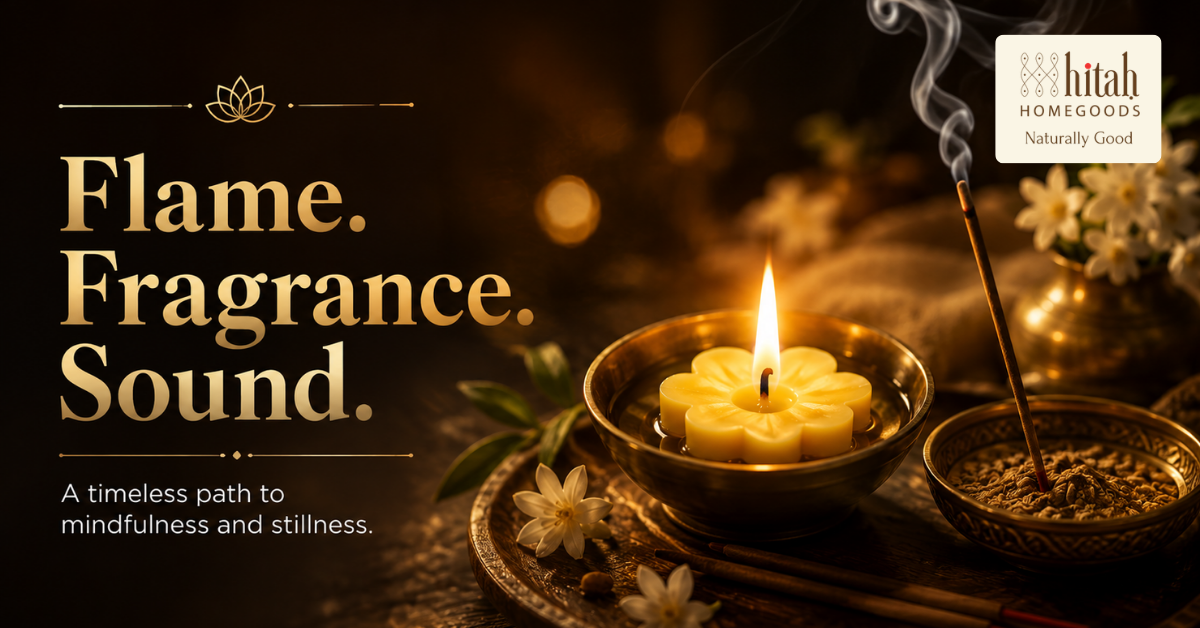
Long before screens, artificial lighting, and recorded music, human beings gathered around three powerful sensory experiences: flame, fragrance, and sound. A flickering flame, the aroma of incense or flowers, and the rhythm of a bell, drum, or chant can instantly change the atmosphere of a space.
Even today, these elements are widely used in meditation, mindfulness practices, wellness rituals, yoga spaces, aromatherapy, and spiritual traditions. Their ability to capture attention is not accidental. It is closely connected to the way the human brain and nervous system respond to movement, scent, rhythm, and sensory change.
Flame and the Power of Visual Attention
Flame is never completely still. A flame rises, bends, contracts, brightens, and continuously changes shape. The human visual system is naturally sensitive to movement, light, and contrast, making flame particularly effective at attracting attention.
At the same time, a candle flame is repetitive and gentle. It gives the mind a visual point of focus without overwhelming it with information. This is one reason candle meditation, flame gazing, and mindfulness practices can feel calming and absorbing.
Flame also carries deep biological significance. For early humans, controlled flame meant warmth, protection, cooked food, light, and community. Over time, gathering around flame also became associated with storytelling, ceremony, reflection, and human connection.
Perhaps this is why simply lighting a candle can transform the atmosphere of a room and create a natural invitation to slow down.
Fragrance, Memory and Emotion
Our sense of smell has a particularly close relationship with memory and emotion.
Odor molecules activate specialized olfactory receptors in the nose. Signals then travel through the olfactory system to brain regions closely associated with emotion, learning, and memory.
This connection helps explain why a particular fragrance can immediately bring back the memory of a childhood home, a garden, a temple, a person, or an important moment in life.
Natural fragrances such as sandalwood, jasmine, rose, lavender, herbs, resins, flowers, and incense have therefore been used in cultural and wellness practices for centuries.
Fragrance does more than make a space smell pleasant. It creates a distinctive sensory environment. Lighting incense or introducing a familiar natural aroma can become a signal to the mind that it is time for meditation, relaxation, prayer, reflection, or rest.
This connection between aroma, mindfulness, and emotional memory is one reason fragrance continues to play such an important role in modern wellness rituals.
Sound, Rhythm and the Human Brain
Sound can capture attention even when our eyes are closed.
The auditory system continuously monitors the environment. A bell, clap, chant, drumbeat, singing bowl, or sudden change in rhythm can therefore interrupt wandering thoughts almost instantly.
Rhythmic sounds are especially interesting because humans naturally respond to repetition and timing. We tap our feet to music, anticipate familiar beats, and often synchronize our movements with rhythm.
This may help explain why chanting, mantra meditation, bells, drums, and sound meditation appear in traditions across the world.
A bell marks a beginning. A mantra creates repetition. A steady rhythm gives the mind something simple to follow.
Sound can therefore become an effective tool for focus, mindfulness, relaxation, and creating a meditative atmosphere.
Flame, Fragrance and Sound: A Multisensory Path to Mindfulness
Flame engages the eyes.
Fragrance engages the nose, memory, and emotion.
Sound engages the ears and our sensitivity to rhythm.
Together, they create a powerful multisensory experience.
Across cultures, people repeatedly brought these three elements together: a lamp or candle was lit, something fragrant was offered or burned, and a bell, chant, or musical sound marked the moment.
Our ancestors may not have described these practices using terms such as neuroscience, sensory processing, or mindfulness, but generations of observation revealed something important: when the sensory environment changes, human attention changes with it.
In today’s world of constant notifications and digital distraction, these ancient sensory tools remain surprisingly relevant.
Sometimes creating a moment of stillness does not require forcing the mind to stop thinking. It may begin much more simply—with the gentle movement of a flame, the presence of a meaningful fragrance, and the rhythm of a familiar sound.
From Hitah, you can get Pure beeswax floating candles for gentle flame, Hitah incense sticks for mild fragrance. Choose your favorite music from your playlist and relax.